

From September 10 to 12, Forestal Sylvis took part in the 6th edition of Expo Madera Paraguay, held at the Comité Olímpico Paraguayo. It was three days of close conversations at our stand and active participation in the industry’s dialogue sessions.
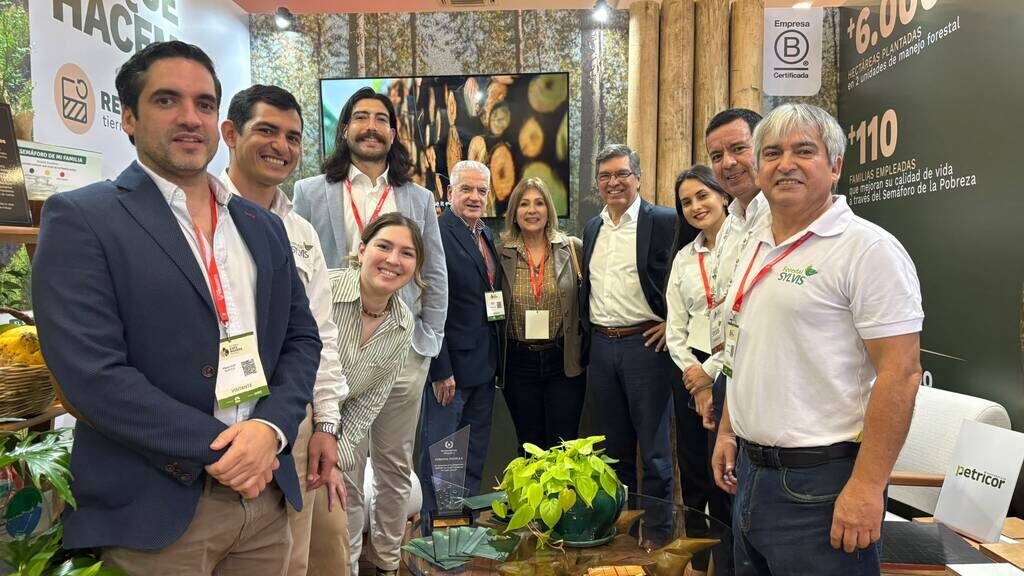
A stand built to show who we are
In our space, we kept it simple: we wanted to tell people, up close, about our relationship with our community and the work we have been doing alongside Fundación Paraguaya. For us, that work is not a side project to the forestry business. It is part of how we understand a strong industry should grow, together with the communities around it, not despite them.
Our founder, Raúl Gauto, went deeper into this same idea in two dialogue sessions during the fair.
Friday: community and impact
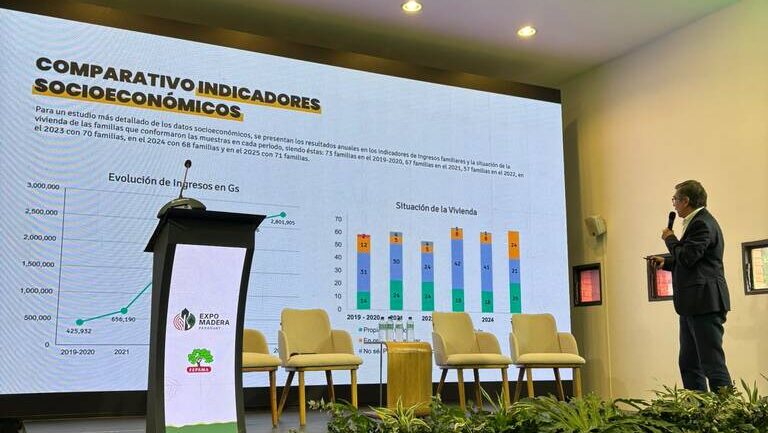
At Friday’s High-Level Panel & Business Cases, we shared what we have learned from working with Fundación Paraguaya and its Poverty Stoplight methodology, now used in 63 countries. It is a 50-question survey that each family answers themselves, to self-assess their own quality of life, classifying each indicator as red, yellow, or green. The goal is simple and actionable: turn red indicators into green ones. With water, for example, a red indicator means having to fetch it from more than 100 meters away; yellow means having a well; green means already having a tap with potable water at home.
Today we manage close to 6,500 hectares under silvopastoral systems, with one of our main plantation clusters in Paraguarí, the district of Ybycuí, and the Cordillera area, near the Acahay volcano and Ybycuí National Park. We chose to work in the upper watershed to protect the water flowing into the park, and land that was once pure sugarcane fields has become roughly 1,300 hectares of silvopastoral forest.
Along the roads of Limpio, Yataity, and Costa Cordillera live about 150 families, many of whom are the source of the workers on our plantations. By applying the Poverty Stoplight consistently between 2019 and 2025, we saw a substantial improvement in their quality of life, without resorting to handouts: red indicators dropped from 21% to 7%, while green indicators rose to 46%. Over the same period, average family income went from 425,000 to 2,800,000 guaraníes per month.
All of this is part of what it means for us to be a B Corp: we do not exist only to make money, but to create real wealth, one that combines economic, social, and environmental value. That impact is the result of genuine work in the plantations (thinning, pruning, fertilizing, ant control), and we are proud that 60% of our workforce is made up of women.
Saturday: in Raúl’s words, added value and world-class genetics
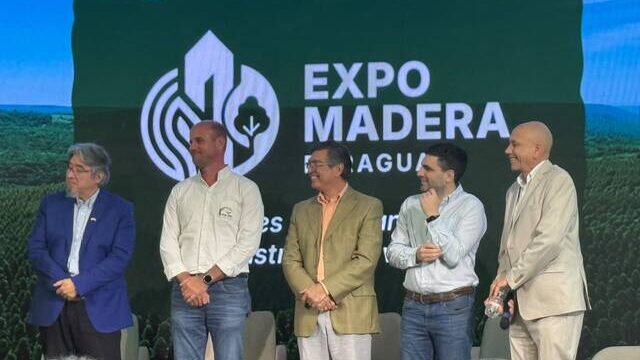
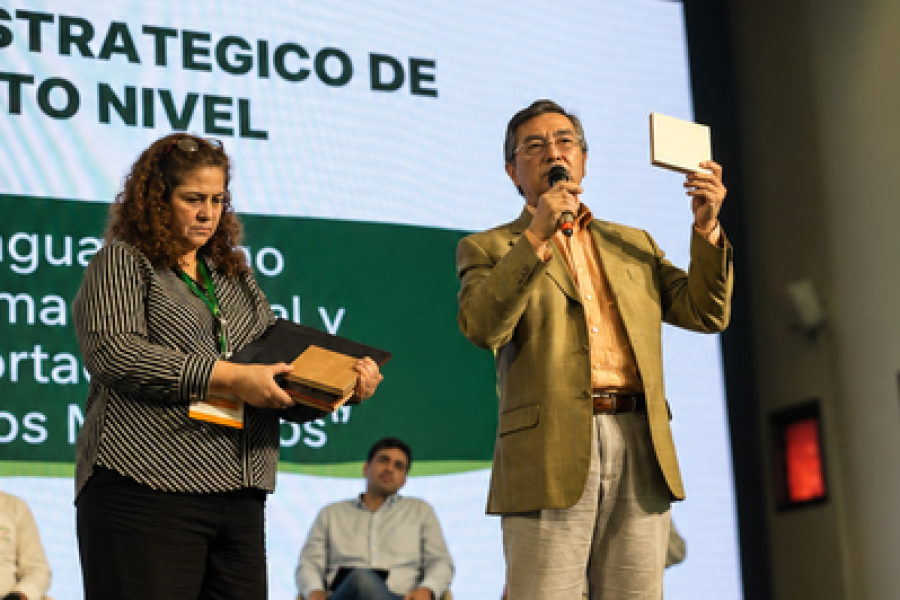
At Saturday’s High-Level Strategic Panel, the conversation centered on Paraguay as an industrial and export platform. Raúl was asked which new industrialization lines could reach real scale in the country in the coming years. Here is what he said:
“That dream that Ricardo Kiriluk had with Shell almost 40 years ago has had many children, many fruits. The good news is that Paraguay’s eucalyptus genetics are world-renowned. I want every Paraguayan to know that every day we receive praise for the quality of Paraguay’s eucalyptus wood.
We work in plywood and veneer, and one of the things that makes me happiest when I talk to foreigners who visit is that they ask me: ‘do you all work together?’ And it’s true, we work together with the government, we work together, and we have to keep working together, because that also sells in the market. It may not seem like part of the industry, but it is.
As Ricardosaid, we are improving the prices of our product: we are better known, we are taken more seriously as a country. But look at this: this is raw plywood, the first product that comes out of the factory. What matters is adding value to it, because the material is so good that we have to keep adding more value to it.
A first stage is applying the film, which keeps cement from sticking to it, and is used in construction for formwork, allowing up to 15 uses before it wears out. Then we decided to move into decoration, and started entering the world of varnishing: this is a varnished Paraguayan plywood that goes into the decoration industry. And to close, one more stage: this white material you see here is not melamine or plastic, it is what’s called HPL (high pressure laminate), natural resins pressed at very high compression that produce a highly durable product. This is what all the kitchen furniture in the United States is made from, office furniture, restaurant tables, because this material does not scratch even with a screwdriver.
If you add this HPL to a good-quality Paraguayan plywood, it sells for 50% more than raw plywood. With this, we are going to start building a brand in the global market, and I think that’s what the question about which new industrial lines Paraguay can develop is really about.”
Thank you
To everyone who stopped by our stand, listened, asked questions, and joined the conversation over these three days: thank you. Those conversations are what make being present at spaces like this worthwhile.


